
Twelve stages between a barn wall and a dining table.
A cinematic walk through every operation we run on a salvaged plank — from the first crowbar pull on site to the signed provenance card slid under the table on delivery day.
A reclaimed plank can fail at any of these twelve gates. A single deep check found at stage seven means the board returns to the rack, not the table. A moisture reading off by two points at stage six means another week in the kiln. We document every refusal because that is the part of the work clients rarely see — and the part that decides whether the finished piece will still be flat in twenty years.
The figure of two hundred hours is not a marketing number. It is the average pulled from our last twenty commissions, logged by the makers themselves at the end of each session. Some pieces run shorter. The granary sideboards have crossed three hundred.
A plank's full passage through the studio.
Click any stage to load its short film. Each clip runs around twenty seconds and shows the operation in real time, without speed-up or commentary.
-
 0:20 Stage 01
Source Survey & Barn Audit
A maker travels to the structure with a camera, a clipboard, and a moisture meter. We photograph timber in place, sketch the building footprint, and meet the owning family. No purchase happens on the first visit.
 0:20 Stage 02
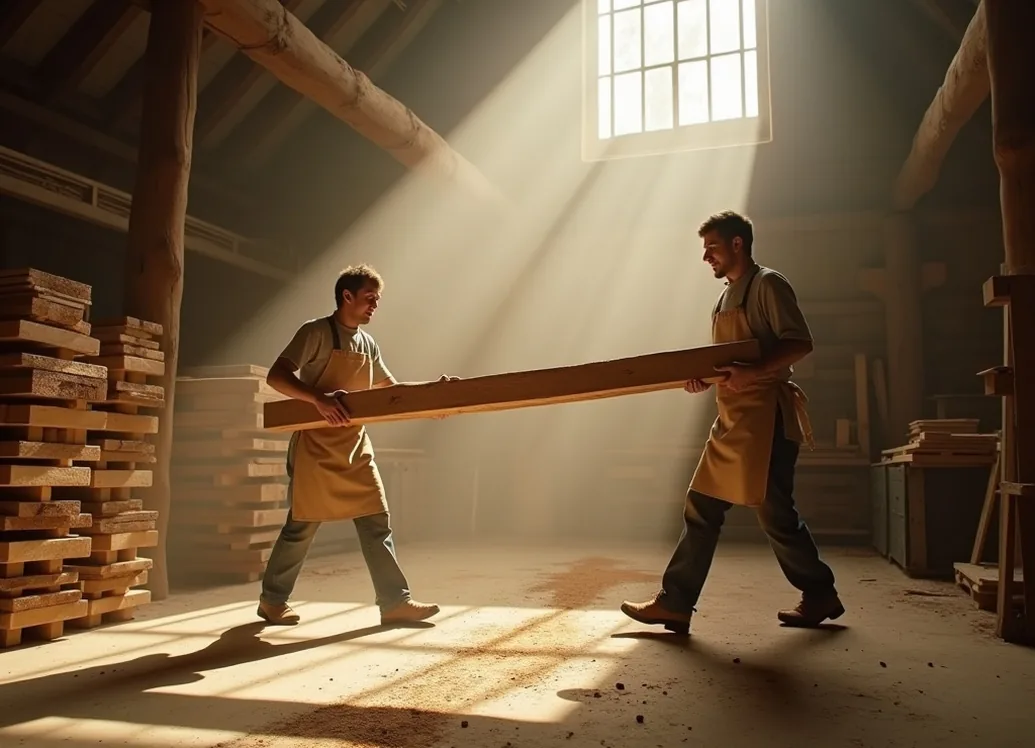
Manual Demolition
No excavators. Walls, lofts, and rafters come apart by hand, board by board. Slow, expensive, and the only way to keep nail patterns, weather marks, and joinery scars intact for the rest of the journey.
 0:20 Stage 03
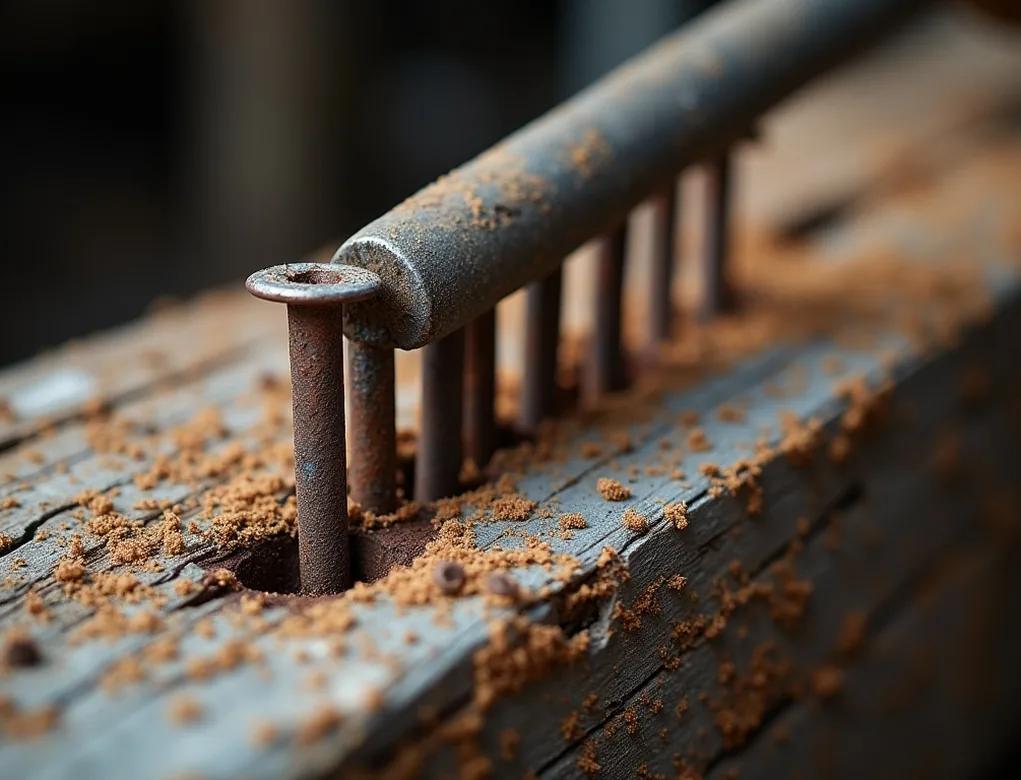
Iron Pull & Nail Extraction
Every rusted nail, lag bolt, and forgotten staple is removed by hand. The board is then scanned with a magnetic detector — twice. Missing one piece of iron at this stage destroys planer blades five operations later.
 0:20 Stage 04
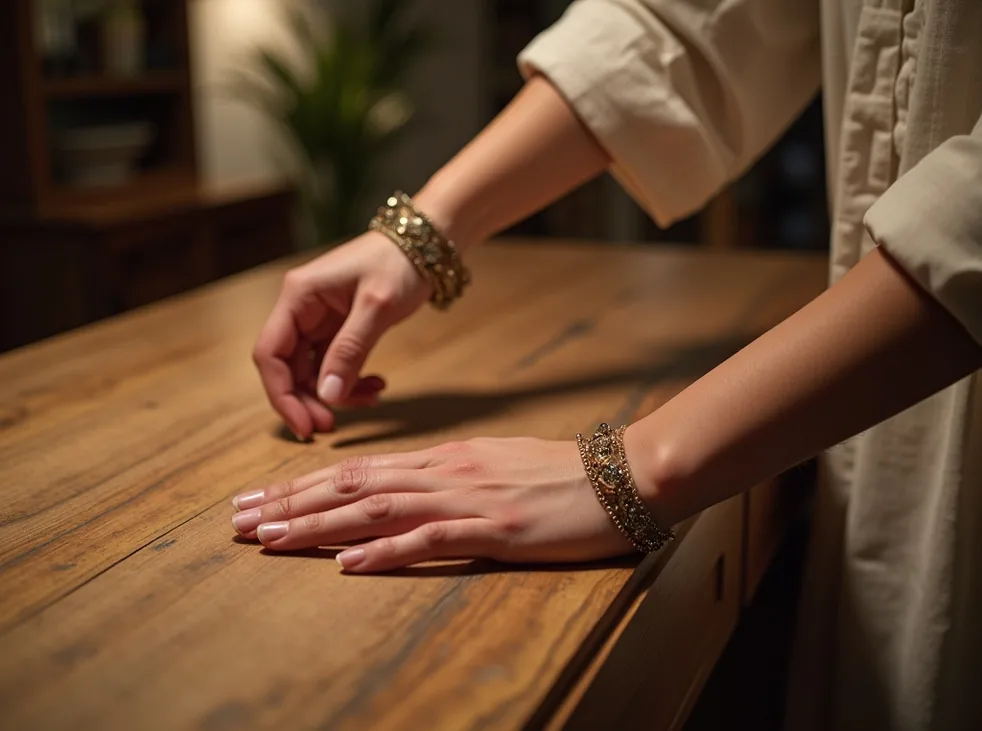
Surface Read & Cleaning
Each board is cleaned by hand with a soft brass brush and dry rag. We do not sand at this stage — patina, silvering, and tool marks are the whole point. The maker reads the surface for hidden checks before signing the board into inventory.
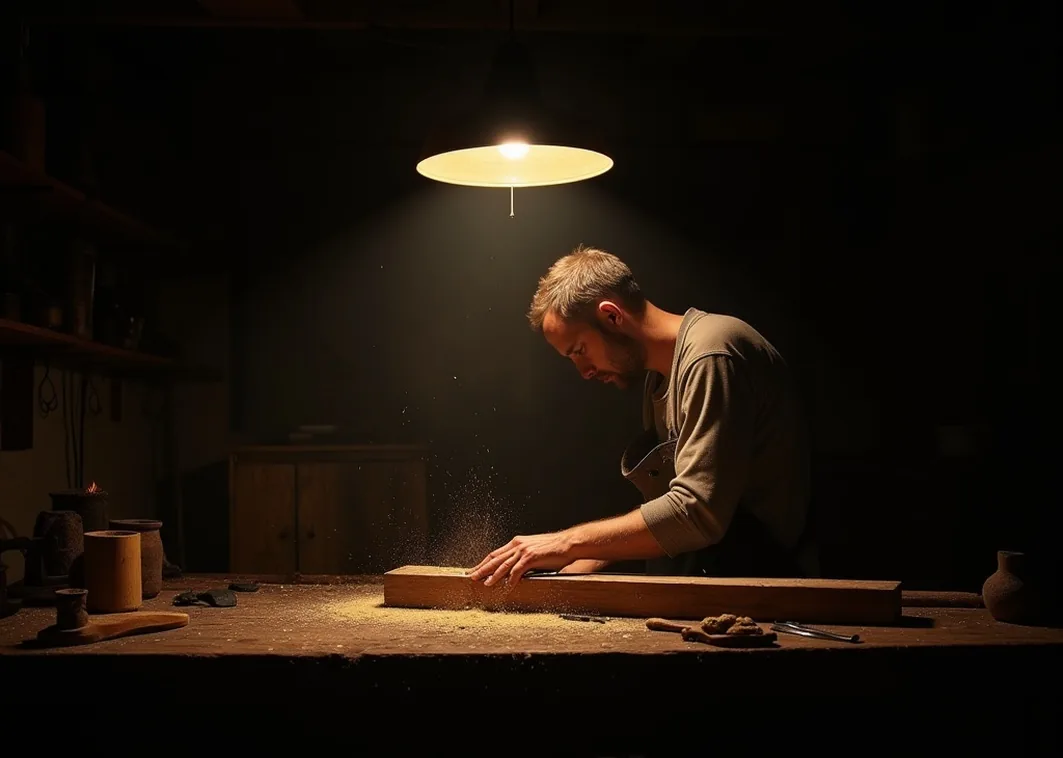 0:20 Stage 05
Air Drying & Stickering
Boards are stickered with one-inch spacers and stacked under the open shed. Cross-flow air for fourteen to twenty-one days draws the field moisture out before any kiln work begins. Rushing this stage shows up as cracks two seasons later.
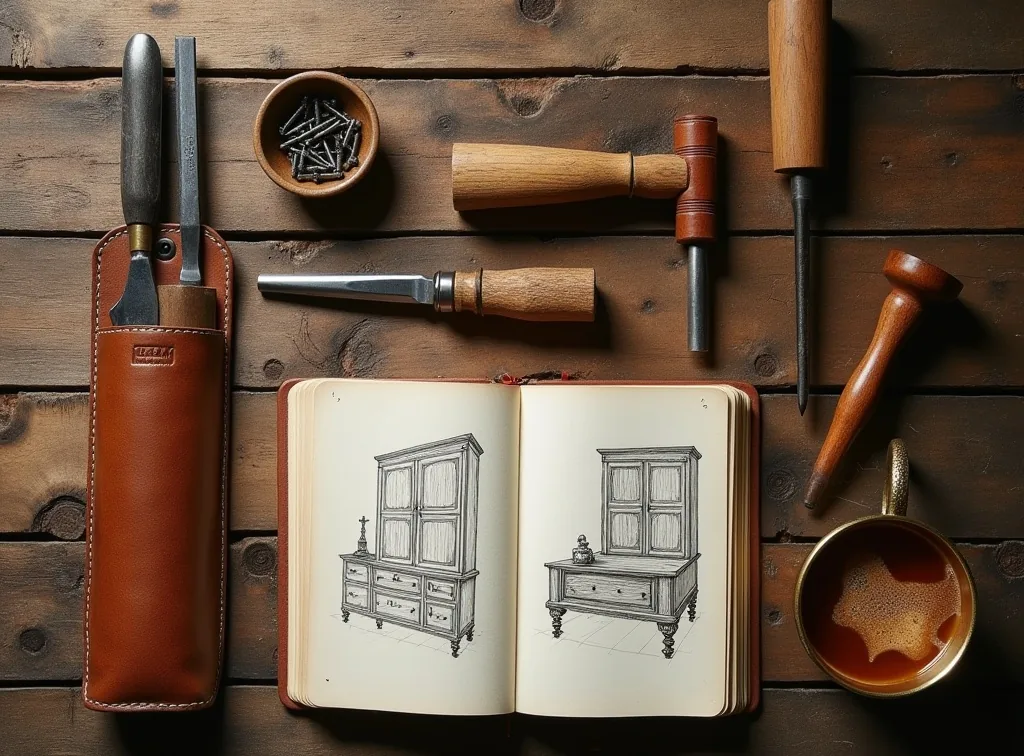 0:20 Stage 06
Kiln Drying & Stabilisation
A low-temperature solar kiln brings moisture content down to between eight and ten percent. We log readings every twelve hours. A board that does not settle is rotated to a slower bay. Some make a second pass.
- 0:20 Stage 07
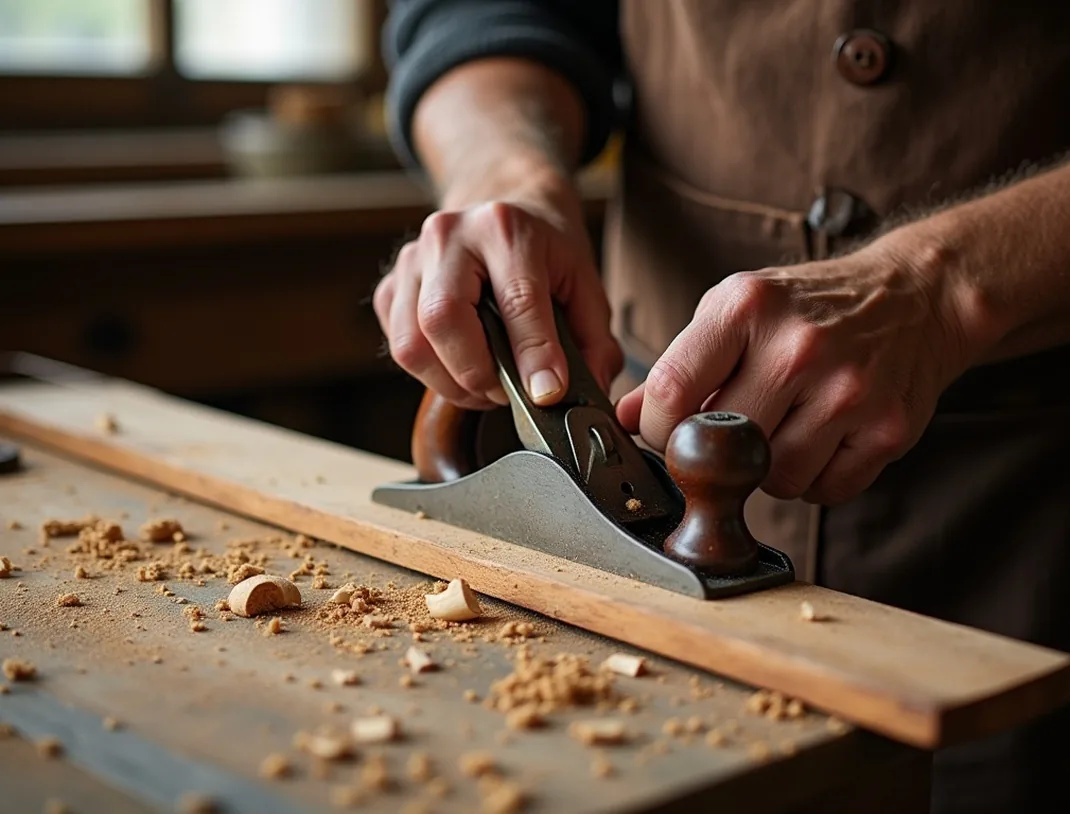
Milling & Calibration
One face is jointed flat, the opposing face planed to match. Boards are then ripped to a working width that protects as much of the original weathered surface as possible. The off-cuts are not waste — they become inlay strips and provenance card stock.
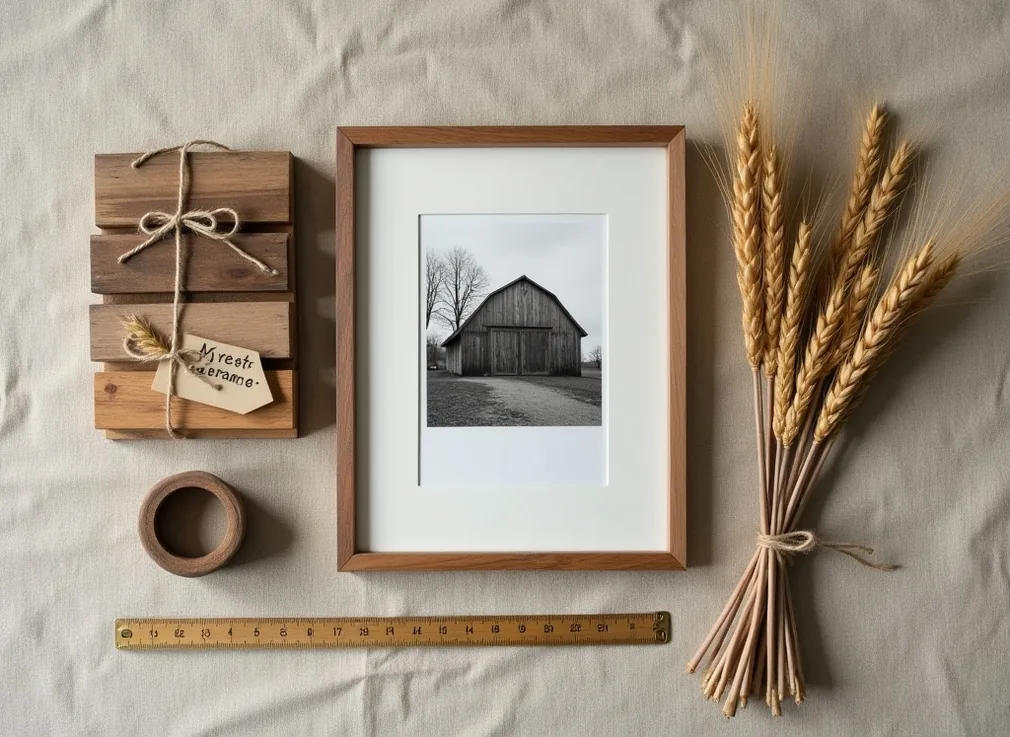 0:20 Stage 08
Grain Reading & Reveal
Mineral spirits are wiped across the freshly milled face. The grain rises, hidden checks darken, and the plank announces what it wants to become. The maker decides table top or shelf in this hour, not the brief.
 0:20 Stage 09
Hand Joinery
Mortise-and-tenon joints, dovetails, and breadboard ends are cut by hand at the bench. Every joint is dry-fitted three times before glue is mixed. We pin tenons with hand-forged iron pegs from a smith two villages over.
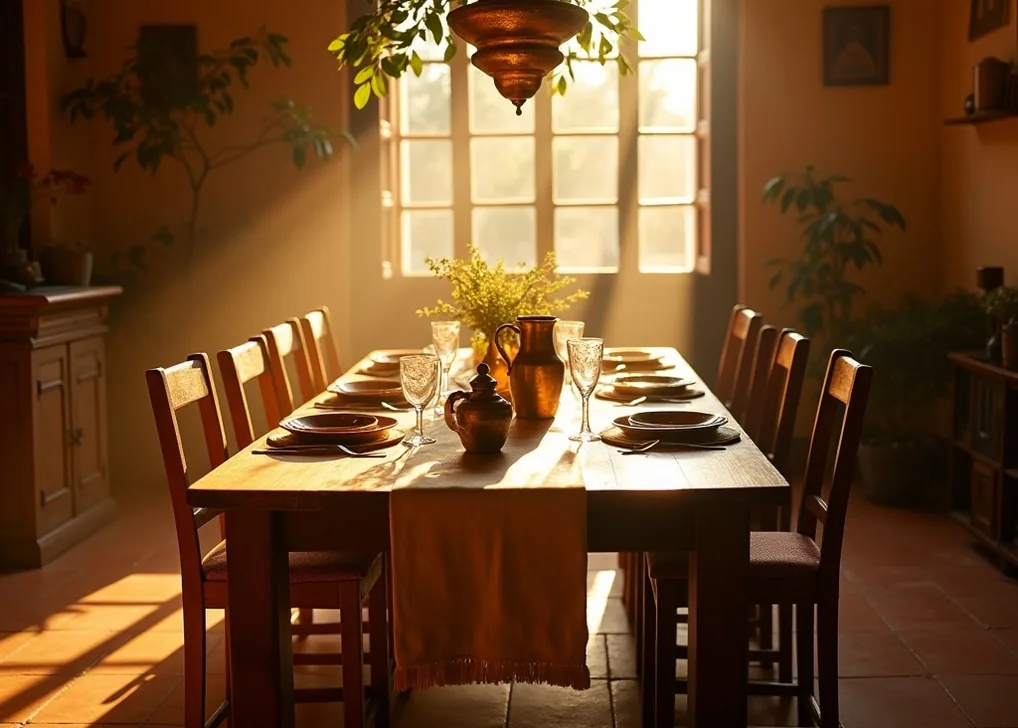 0:20 Stage 10
Glue-up & Clamping
Slow-set hide glue at the show joints, PVA where the load demands it. Steel parallel clamps are applied in stages, and the assembly rests overnight. The next morning is the first time the piece looks like furniture.
 0:20 Stage 11
Finishing & Hand Oiling
Two coats of food-safe hardwax oil go on with a cotton pad, hand-buffed between coats. A final beeswax-and-tung blend is applied warm and burnished by palm. The piece breathes for forty-eight hours before any wrapping.
 0:20 Stage 12
Provenance Card & Dispatch
A signed provenance card is hand-typed on a 1962 Olivetti, naming the source structure, the harvest year, the four makers, and the finishing schedule. It is slid under the piece on delivery — no plaque, no logo, no fanfare.
Two hundred hours, audited.
Average distribution of handwork across the twelve stages, taken from our last twenty completed pieces.
- 01 — 04 · Sourcing & preparation 36 hrs
- 05 — 06 · Drying & stabilisation 18 hrs
- 07 — 08 · Milling & reading 28 hrs
- 09 · Hand joinery 72 hrs
- 10 · Glue-up & clamping 10 hrs
- 11 · Finishing & oiling 24 hrs
- 12 · Provenance & dispatch 12 hrs
Hours per piece, average across last twenty commissions. Granary sideboards regularly cross 300 hours; smaller benches occasionally land closer to 140.
Send a brief, hold a plank.
Reading sessions are held on Tuesdays and Saturdays at the Khandyam workshop. Two slots per day, ninety minutes each, hosted by a senior maker. Most clients commission after the first session.